
Davidson County Warrant Checks
No single public lookup covers every outstanding warrant here. That is the first thing to understand about a Davidson County warrant check. MNPD runs the criminal-warrant inquiry window, and it asks anyone seeking status to show up in person at its Criminal Warrants Division with photo ID. A criminal case search can reveal the case behind an order, and the sheriff’s inmate search shows who is in custody. Neither is a live warrant list, so treat both as leads. Figure out what kind of paper you are chasing before you call anyone. A traffic ticket, a city ordinance case, a missed General Sessions date, an arrest warrant, and a civil summons each sit in different offices in Davidson County. Start with the court named on the citation or order, then confirm current warrant status with the office that keeps that record.
- For a possible Metro criminal arrest warrant, use MNPD’s in-person inquiry with government photo ID. Its page does not give warrant results by phone.
- Use the Criminal Court Public Case Search only to find case and docket context. Search with the name used at arrest; optional date of birth can help narrow a match.
- For a missed General Sessions date, ask the Criminal Court Clerk or General Sessions Criminal Clerk about the Set Aside process and current fees.
- For a traffic matter, identify whether the ticket is Metro or state-issued, then use the Circuit Clerk’s Traffic Violation Bureau or the Criminal Court Clerk route.
- For a city ordinance case, contact that city’s court. Tennessee has no single public statewide warrant search.
No Single Davidson County Warrant Search
Records in Davidson County are split across several keepers. MNPD answers public criminal-warrant questions. The Criminal Court Clerk holds criminal case and bond records. DCSO serves civil process and keeps its own jail records, while the Circuit Clerk handles civil and traffic files. Municipal courts hold city ordinance and traffic matters. Asking one office cannot settle a question another office owns, so aim your warrant lookup at the right desk. The Tennessee Public Records Act does not build a statewide warrant portal either. You request a record from the office that holds it, and investigative files, sealed material, and juvenile matters may stay closed. Ask for a specific record or a defined set of aggregate information rather than a new all-warrants database. Be careful with third-party sites, old news stories, and social media posts about Davidson County. They run stale or thin. An empty result in one index proves nothing about whether a warrant exists.
Warrants in Davidson County: The Main Types
Courts here issue different paper for different jobs. In Davidson County, an arrest warrant follows a probable-cause finding and lets officers take someone into custody. A bench warrant usually follows a missed court date or noncompliance. A search warrant authorizes a specific search or seizure, not an arrest. Local forms also use the word “capias,” which names a type of court process rather than a separate database. Civil warrants, summonses, writs, body attachments, traffic holds, and orders of protection each carry their own rules. Route any of them through the issuing court.
| Process | Common local setting | Who to ask |
|---|---|---|
| Arrest warrant | Criminal charge and probable cause | MNPD Criminal Warrants and issuing court |
| Bench warrant or capias | Missed date or court noncompliance | Criminal Court Clerk or issuing court |
| Search warrant | Search or seizure under judicial order | Issuing court; details may be restricted |
| Civil warrant or writ | Summons, possession, judgment, or service | Circuit Clerk or DCSO Civil Warrants |
Davidson County Case Search Cannot Confirm Live Warrant Status
The Criminal Court Public Case Search takes a search type, first and last name, and an optional date of birth. It can surface a case or a docket event. What it cannot do is guarantee a current warrant flag on every matter, so Davidson County residents should not lean on it for live status. General Sessions dispositions reach back to 2000 in the described coverage; older records run thin. Expunged information drops out entirely. Open the Criminal Court Public Case Search for case context, then call the responsible clerk or MNPD about current process. A name match is a lead, not an answer. A blank result in this system says nothing about what another Davidson County office holds.
Davidson County Warrant Records: What They Show
A court file can carry more than one number and date. The General Sessions Set Aside form asks for warrant numbers plus a division, while the online case search is built around the underlying case instead. Bond figures move. An old docket entry alone will not tell you whether an order was served or recalled, so confirm with the Davidson County office holding the record.
| Warrant number | Process identifier; it may differ from the case number. Example only: GS-Warrant-Number |
|---|---|
| Case number | Points to the court matter and docket history. |
| Issuing court | Names the judge or court responsible for the order. |
| Charge or reason | Describes the allegation or missed obligation, not its final outcome. |
| Bond and status | May change; ask the clerk or warrant office to confirm present terms. |
| Service or return | Shows whether an officer or process server reported execution. |
General Services’ blank Set Aside form shows the fields without exposing any real case. Keep a copy of any order a judge signs, and check with the clerk that it arrived.
Night Court Connects Probable Cause and Bail
Metropolitan General Sessions Night Court runs around the clock at 440 3rd Avenue North. Magistrates there hold probable-cause hearings, issue arrest and search warrants, set bail, and handle specified ex parte matters. It is a working court, not a phone lookup line. The official Night Court information page describes the court’s function, and the Tennessee Courts directory for the Twentieth Judicial District lays out Davidson’s trial-court structure. One caution: the court homepage and the judges directory disagree on how many magistrates sit there, so treat any staffing count as unsettled.
Davidson County Warrants: Who Issues, Who Serves
Judges and judicial magistrates issue process; police and other authorized officers serve it. That division of labor runs through everything in Davidson County. MNPD’s manual says sworn officers may execute criminal warrants and capiases. DCSO’s civil unit serves civil papers and keeps inmate and civil records apart. For a criminal-warrant status question, the MNPD Criminal Warrants Division is the public channel. Its page asks visitors to bring photo ID and appear in person at 440 3rd Avenue North. You can dial 615-862-8600 if no one is at the desk or 615-862-7685 for division information. Staff will not discuss warrant information over the phone, so plan on going in.
MNPD Criminal Warrants Division
440 3rd Avenue North, Nashville, TN
615-862-8600 for routing
Davidson County Sheriff’s Office
One Jerry Newson Way, Nashville, TN 37206
615-862-8123
Safe Surrender Has Dates and Eligibility
Safe Surrender in Nashville is voluntary, not an amnesty. A judge decides each case. MNPD runs it with DCSO, the District Attorney, the Public Defender, Davidson County courts, Juvenile Court, and clergy. Eligibility stays limited. The most recent event ran December 12–13, 2025. Organizers reported 308 participants, 96 warrants among 62 attendees, and 670 expungements in 2024. Those numbers measure one event, not Davidson County's outstanding warrants. A DA page counts participants differently. Watch the MNPD warrant program page for the next event or the separate Safe Surrender 365 details, and remember neither route promises dismissal, release, or a set bond.
Handling a Davidson County Warrant
Suspect an arrest warrant in Davidson County? Talk to a Tennessee lawyer or public defender first. Missed a General Sessions date? The clerk's steps are specific. Get the warrant copy, complete a Set Aside order, take it to a judge, and return the signed order with the current fee to receive a new date. If a bonding company is involved, bring its written agreement too. Civil process questions go to the issuing civil court or DCSO Civil Warrants. For traffic, ask where the matter stands: still in its compliance period, in default, or already referred for warrant action. Paying alone may not clear every court or license consequence.
Before acting: Confirm the court, current status, and next step with counsel or the responsible office. Do not rely on a docket hit, booking page, caller, or text as final proof.
Davidson County Traffic Warrants and Ticket Deadlines
Metro tickets go to the Circuit Clerk's Traffic Violation Bureau. State citations go to the Criminal Court Clerk. A Metro citation usually allows 45 days to comply. After that, the TVB warns, a default judgment can add costs, with Tennessee Safety reporting to follow. A Traffic Warrant Division referral can come after the stated ten-day period. Contempt runs on a separate track. The state portal wants ticket number and issue date. Its CDL notice limits traffic school and proof-of-correction for commercial drivers. If a ticket is past due, needs a hearing, or a warrant or license hold may exist, call the clerk. Goodlettsville citations deserve extra care, since the city sits in both Davidson and Sumner counties. The Traffic Violation Bureau and official ticket portal explain the live process, and a citation, a default judgment, a suspension, and a warrant remain separate records.
Warrant Record Access Under Tennessee Law
Tennessee's Public Records Act, T.C.A. § 10-7-501 et seq., opens eligible agency records to you, subject to exemptions and custodian rules. The state keeps no central public-record repository. Metro routes some Davidson County departments through GovQA. MNPD, DCSO, the court clerks, and the Juvenile Court Clerk each use separate channels. Ask for a defined record, a date span, and the likely office. No agency builds a list it does not keep. Metro's Public Records Center shows which departments use its central system and which run their own desks.
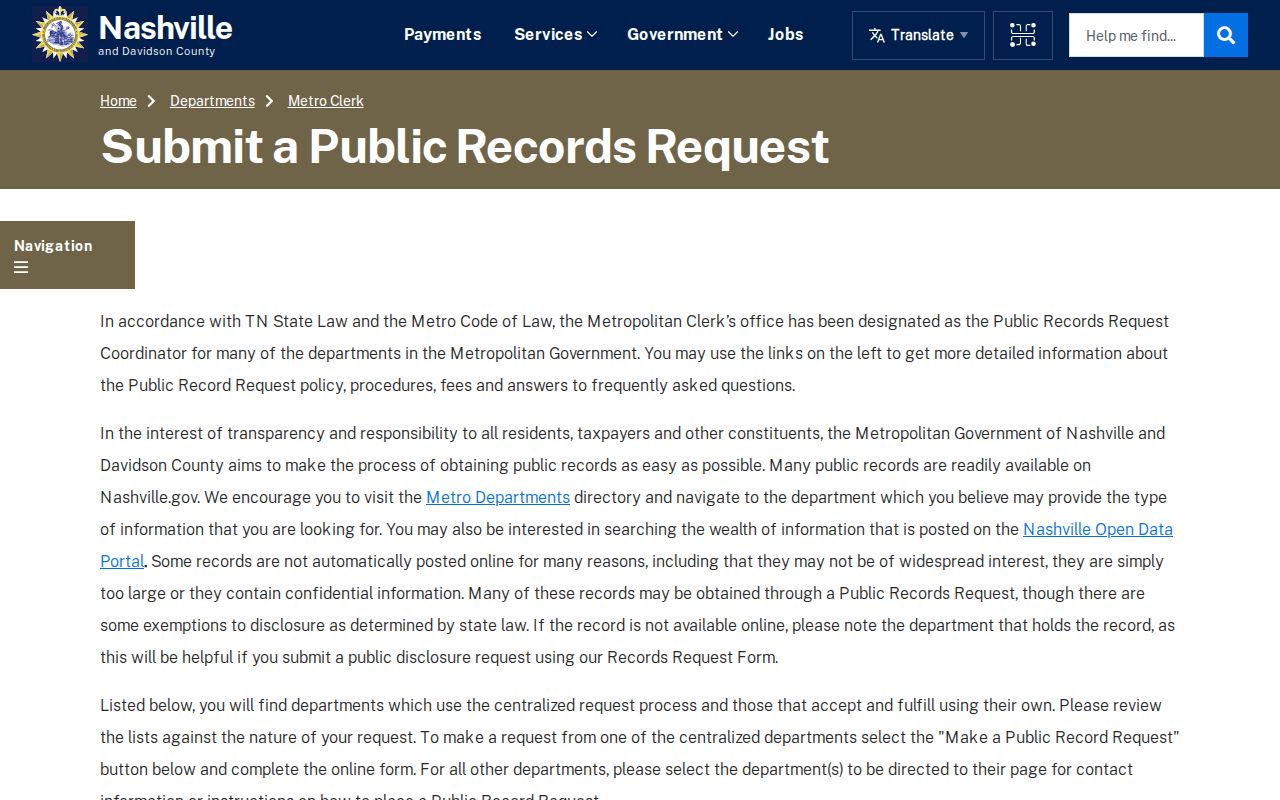
The image shows Metro’s routing distinction, not an individual warrant record.
Access rules: The Tennessee Public Records Act FAQ explains requests to the office holding a record. Tennessee’s search-warrant handout describes probable cause and court procedure. Juvenile, sealed, investigative, medical, and protected records may have separate limits.
City Court Roles Differ Across Davidson County
City courts here don't all work alike. Nashville relies on Metro police and General Sessions ordinance jurisdiction. Goodlettsville runs its own traffic court, though the city spans two counties. Forest Hills and Oak Hill keep city-court functions while MNPD handles public safety. Belle Meade has its own police department and city court. So a citation naming a Davidson County city may still route elsewhere for the conduct or the state case. Federal matters belong to the U.S. District Court for the Middle District of Tennessee and the U.S. Marshals, not Metro. The courthouse sits at 719 Church Street. PACER carries the federal docket, though public dockets can omit sealed or unserved process, and the federal court location page lists current visitor details.
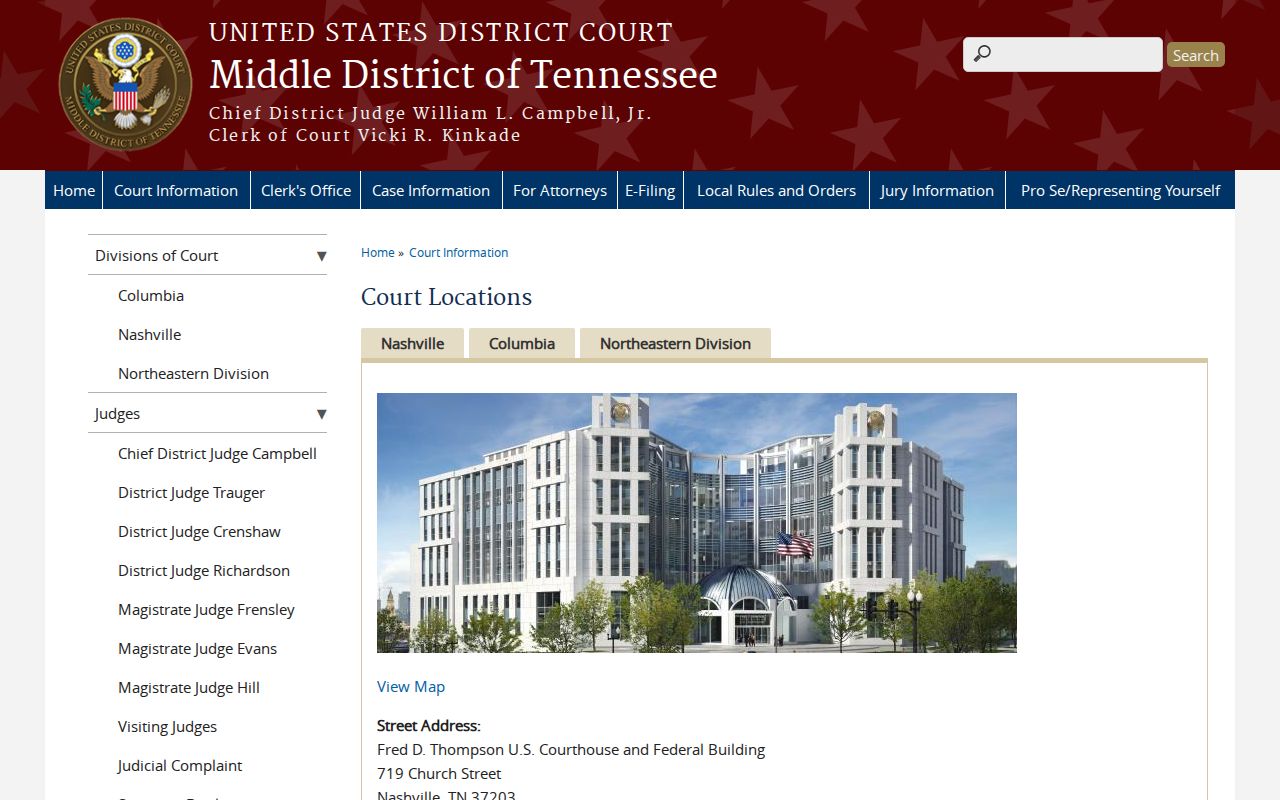
Read the local city pages for each place’s police and municipal-court route.
Nashville-Davidson Census Counts Mark Different Areas
The 2020 Census gives two different counts. Nashville-Davidson balance: 689,447 people. Davidson County as a whole: 715,884. The balance figure covers the consolidated government outside separately counted incorporated places, so it is not a warrant count or the population of every city-court area. The Census Bureau's Tennessee incorporated-place table lets you compare the city and county geographies side by side.
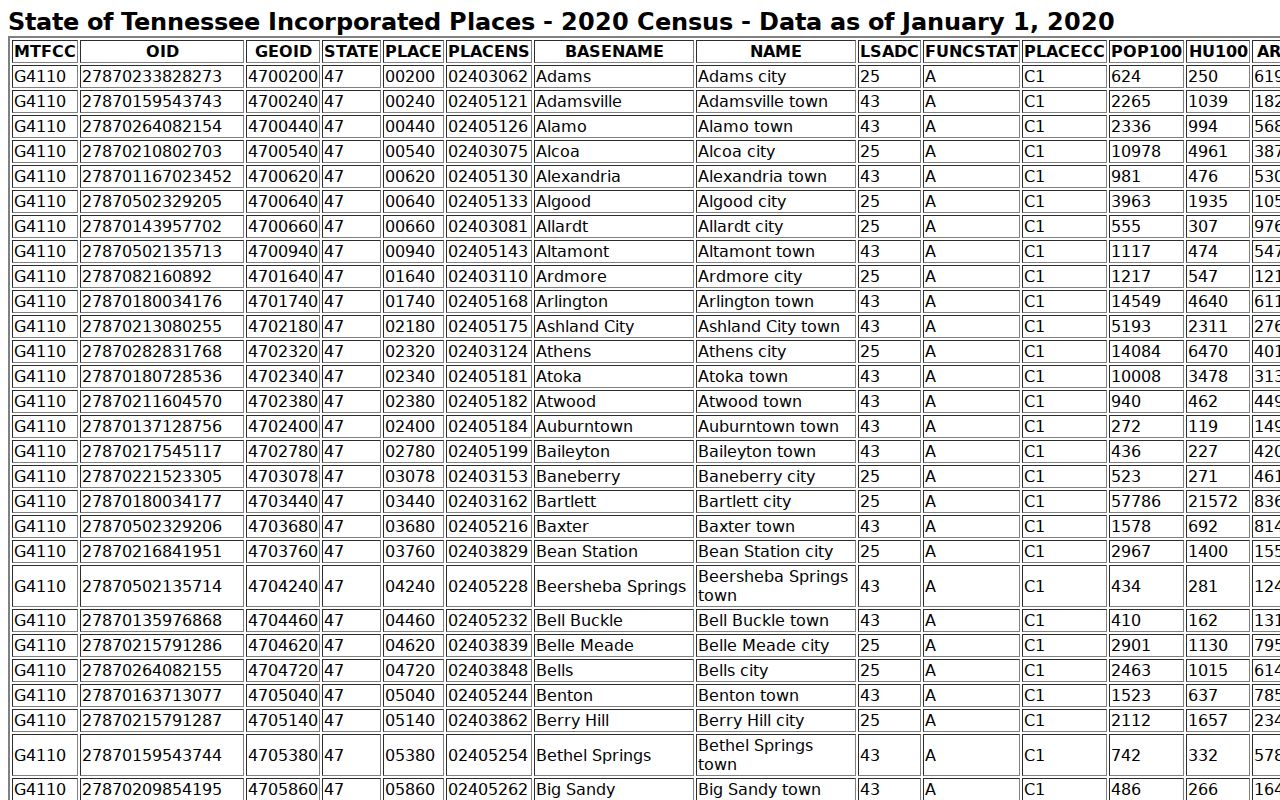
These census categories help explain why city-court and county record sets are not identical.
City Warrant Records in Davidson County
City matters cover traffic, ordinance cases, and missed court dates. Check the issuing local court first. The population figures that follow are 2020 Census incorporated-place values, with Nashville-Davidson balance reported separately from the Davidson County total.
Nashville Warrants
689,447 balance population; MNPD and General Sessions ordinance route.
Goodlettsville Warrants
17,789; city traffic court crosses the Davidson-Sumner line.
Forest Hills Warrants
5,038; city court with Metro Police services.
Oak Hill Warrants
4,891; city court and Metro Police enforcement.
Belle Meade Warrants
2,901; its own police department and city court.